ReImagining the Systems We Built to Serve People
ReImagining Creative identifies where systems have drifted away from the humans they were built to serve, then redesigns the relationships, governance, and structures that keep that fracture in place.
Relational Architecture · SoftFire · Convergence Alchemy
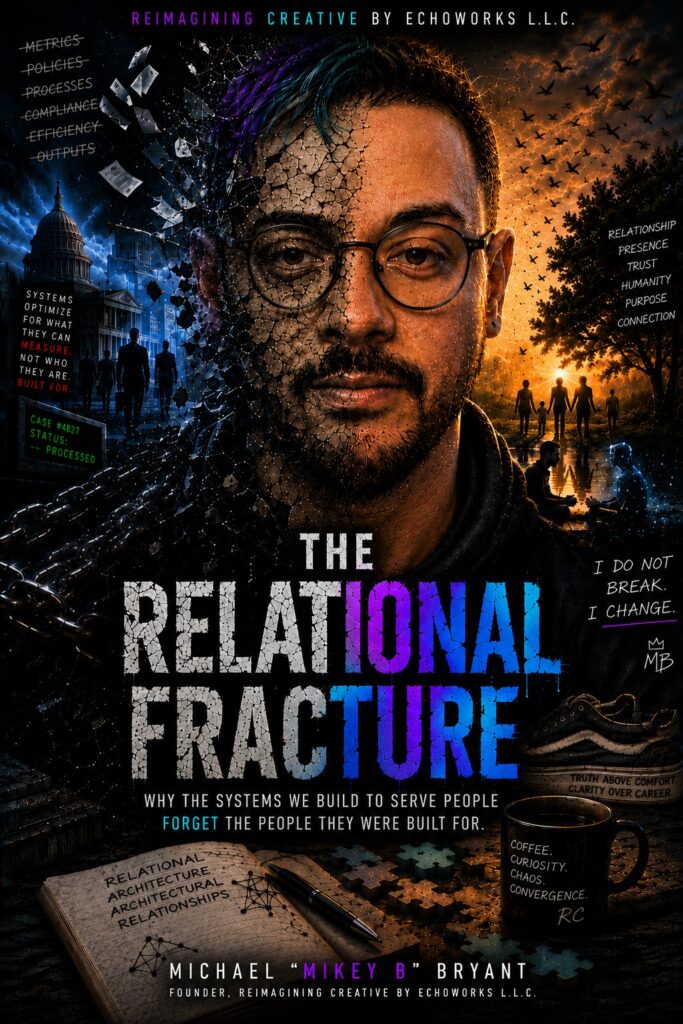
The Relational Fracture
The systems didn’t suddenly stop working. They slowly stopped serving the people they were built for.
Organizations measure outcomes, efficiency, compliance, productivity, performance, risk, and growth. Those measures may begin as useful proxies for purpose. Over time, however, the proxy can become the thing the system actually serves.
Human Need
→
Purpose
→
System
→
Proxy
→
Drift
→
Relational Fracture
The Relational Fracture is the point where the human becomes secondary to the machinery supposedly serving them.
Book One
The Relational Fracture
by Michael “Mikey B” Bryant
A systems-level examination of what happens when institutions begin serving their metrics, policies, incentives, procedures, technologies, and abstractions instead of the human beings those structures were created to serve.
What We Do
We work with organizations to locate where relationship, purpose, governance, technology, incentives, and system behavior have fallen out of alignment — and then redesign the parts that hold the misalignment in place.
01
Relational Architecture Audits
We examine policy, process, incentives, communication, technology, and organizational structure to find where each has drifted from the human purpose it was built to serve. The output is a map of where the drift actually sits, not a general sense that something feels off.
02
Workshops & Organizational Learning
We teach teams to recognize drift, contradiction, relational fracture, and proxy capture in their own work — and to name those patterns out loud while they are still patterns, before they harden into policy.
03
System & Governance Design
We redesign processes, AI interactions, decision structures, accountability mechanisms, and the working relationship between people and the systems they operate inside.
04
Implementation & Advisory
We stay through the operational changes. The alternative is an expensive report that dies quietly in somebody’s Downloads folder, and there are already enough of those.
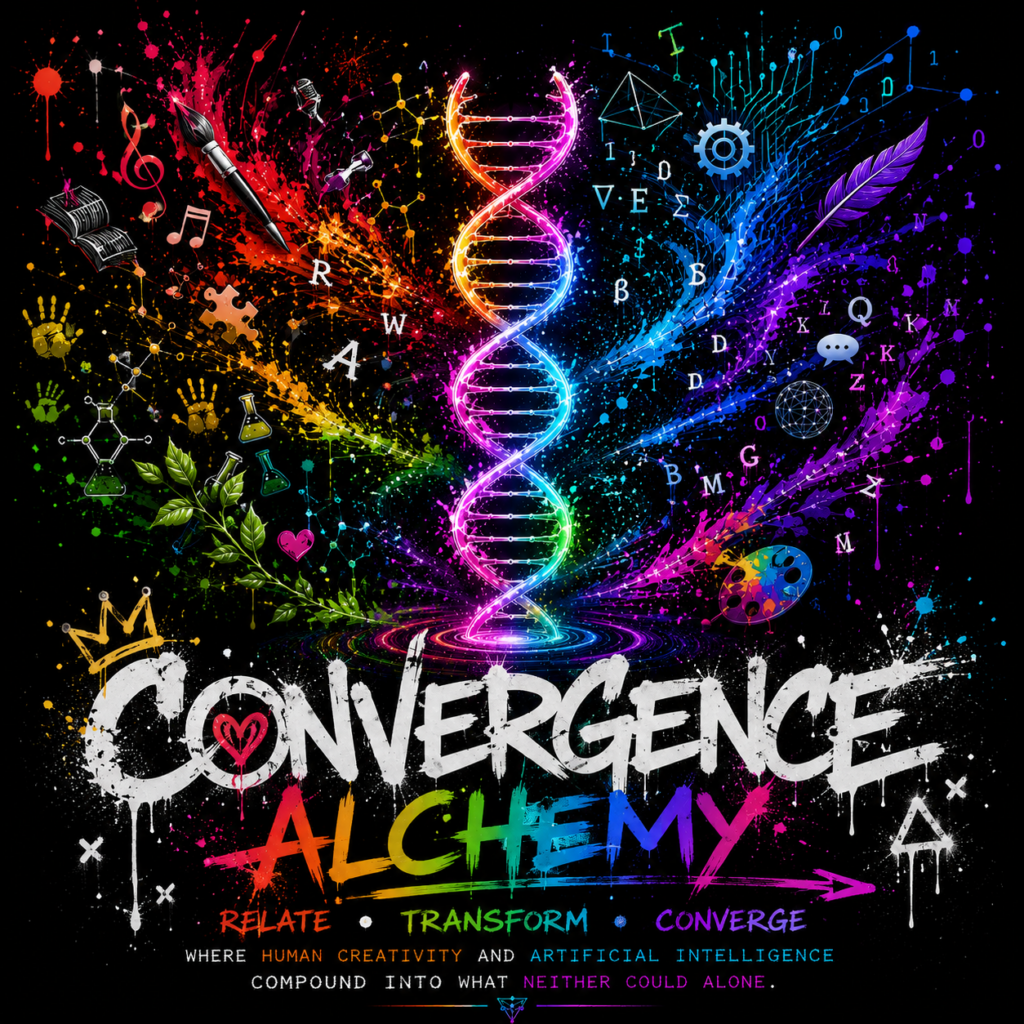
Convergence Alchemy · Coming Soon
Convergence Is Not Collapse
Convergence Alchemy is the methodological and educational layer of ReImagining Creative — the part concerned with how people actually work alongside intelligent systems, and alongside each other, without handing over their own judgment in the process.
It examines how collaboration holds without manufacturing certainty, confusing intensity with truth, collapsing boundaries, or treating AI as a servant, a savior, an authority, or a substitute for human relationship.
Human intelligence and machine intelligence do not have to become the same thing to work together. Convergence happens when distinct kinds of intelligence stay distinct while contributing to something coherent that neither could reliably produce alone.
Difference remains. Coherence emerges.
Coming soon. Curriculum, frameworks, and learning pathways are in active development. The full Convergence Alchemy area of this site is not published yet.